
Arkheron Beginner Guide: Your First Runs, Step by Step
A first-run plan for Arkheron: the order to play the modes, how relics build a character, and how to survive your first Ascension climb.
Arkheron does not hand you a hero. It hands you a body, a team of three and a tower full of relics, then asks you to build something out of them before another squad does it better. The first hour is confusing for almost everyone, because the game's menus explain systems faster than a new player can feel them.
The arkheron how to play→ page covers movement, aim and the dodge chain in more detail than a first run needs, but it is the faster read if a specific control is not clicking.
This guide is the order we would give a friend: which mode to touch first, what a build actually is, and what to do in the opening two minutes of an Ascension match so the run does not end on the first floor.
Quick answer: Play the tutorial, then Learning Spires, then a Training Ascension match against bots, then Spires against people. Only queue ranked Ascension once you can name the four relics you are wearing and what your two-piece set bonus does.
Play the modes in this order
The launch build rebuilt the new-player path for a reason. Each step teaches one layer, and skipping ahead means learning relics, map routing and PvP pressure at the same time.
- Tutorial. Short, voiced, and it now opens with an intro cinematic. Finish it — it teaches the dodge, the execution and the shop, and it dumps you into Learning Spires afterwards.
- Learning Spires. Three floors of 3v3 against tuned-up opposition with much less downtime between rounds. This is where the fight rhythm clicks.
- Training Ascension. A full tower with bots on both sides. You get two bot teammates, which is the closest thing to a real squad without queuing. Use it to learn chest routes and beacon timing without losing rank.
- Spires. Pure 3v3, one fight after another, no looting detours. Best place to test whether a relic combination survives contact.
- Ascension. Ten teams of three, four floors, one winner. This is the mode the rest of this site is built around.
You can also hop into the training room while the queue runs. Selecting Play drops you into practice and starts matchmaking in the background, so dead time between matches disappears.
A build is four relics, not a class
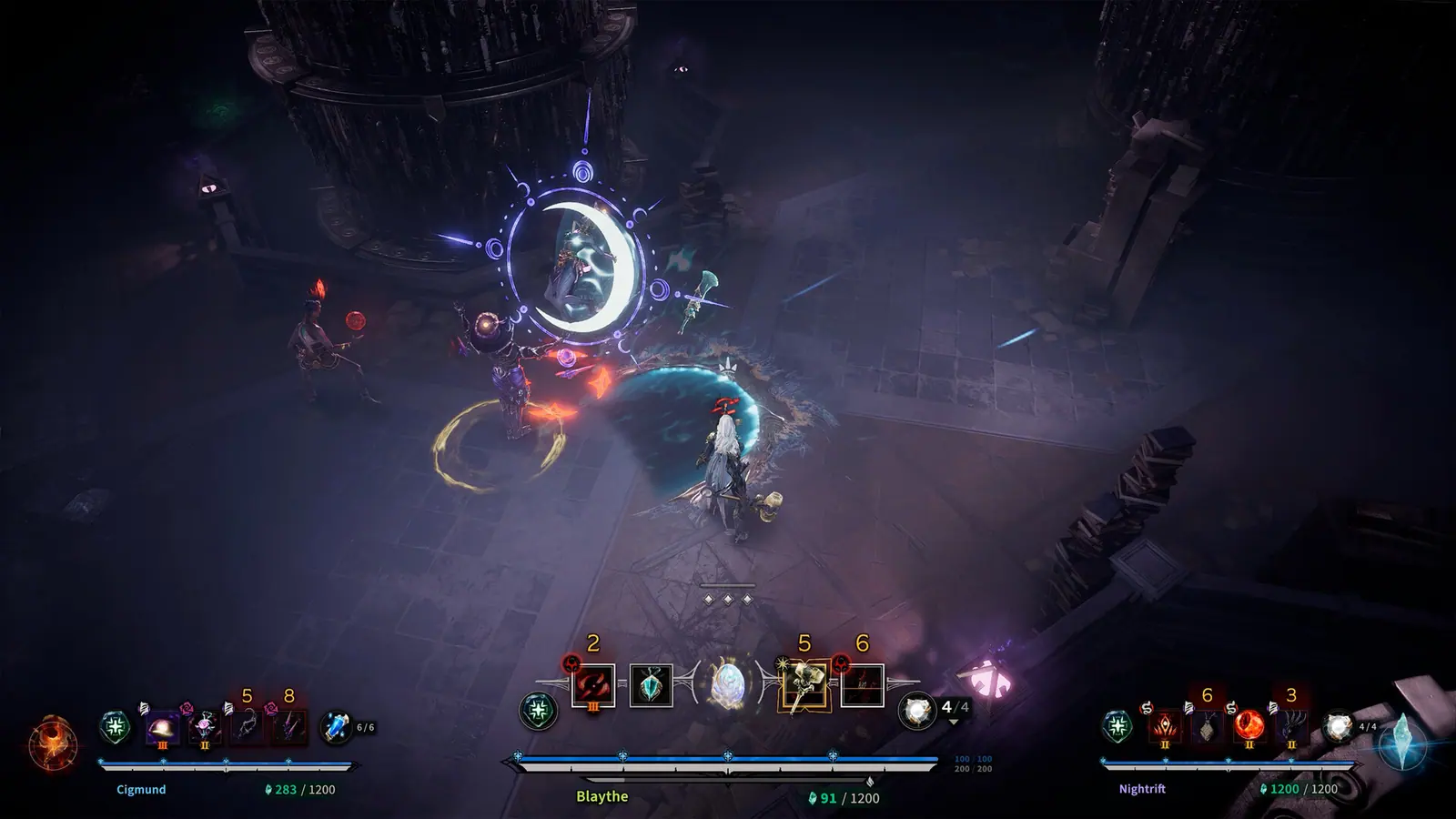
Every ability you have comes from an item. You do not pick a kit at the menu; you assemble one from what you find, buy or take off a corpse. Each Eternal set contains a crown, an amulet and two weapons, and the set rules are simple:
- Two pieces from the same Eternal unlock that set's bonus. Edani's Ferocious adds 20% melee damage, Ravah's Distant adds 20% ranged damage, Leodin's Divine cuts incoming damage by 20%, and Karriv's Persistent shaves 20% off ability cooldowns.
- Four pieces let you transform into the Eternal for the rest of the match and gain a fifth ability on top of everything else. The transformation is permanent, so it is a commitment, not a cooldown.
- Mixed sets are legal and often correct. Two pieces of one set plus two strong generic relics can outperform a forced four-piece while you are still learning.
That is why "which character is best" is the wrong first question in Arkheron. The right one is "which two-piece bonus covers the mistake my team keeps making?" The arkheron builds→ page has five worked combinations if you would rather copy something that already works. If your squad dies to burst, Leodin's mitigation is worth more than a flashier damage set. If nobody can finish a kill, Edani or Ravah fixes that.

The first two minutes of an Ascension run
New players lose most of their early runs before the first fight, usually by drifting apart. Here is a route that keeps three people together without wasting the opening.
- Drop as a group, not as three individuals. The map now lets you drop anywhere, and the heat spots reveal where other teams are committing the moment you hold to drop. Pick one building cluster, land within a screen of each other, and clear it before you move.
- Open chests before you argue about builds. You cannot plan around relics you have not seen. Clear two rooms, then compare what everyone found and decide who is closest to a two-piece.
- Buy at the shrine before the first beacon. Consumables lock in at the end of the hold, and the shop sells the tools that decide early fights: Healing Shots and Healing Wards cost 200 Fragments, Fortitude shards 150. Rejuvenate is 100 and no longer eats your whole wallet.
- Only take a beacon you can hold. Beacons are how the team opens the way up the tower, and starting one is a public invitation. If a teammate is still looting, you are not ready.
Rule of thumb: if your team has fewer than two completed two-piece bonuses when the first beacon is claimed, you are behind the curve.
Habits that separate a second run from a tenth
- Spend the dodge, then count. The dodge regenerates in about a second and a half, and a boosted dodge covers three, four and a half or six metres depending on its level. Holding it "for the important moment" is how players die to the first stun.
- Use line of sight on purpose. Combat is isometric and free-aim, so cover is real. A wall between you and a Ravah is worth more than 50 extra health.
- Ping before you commit. Bots respond to pings, and so do people. A ping on the enemy healer is the difference between a trade and a wipe.
- Treat the bridge as a decision point. Every floor transition asks whether you are ahead enough to take the stairs. If your team is down a player and out of consumables, farming one more room is usually better than a coin-flip fight at the gate.
If you want the full route rather than the habits, the floor-by-floor walkthrough covers each transition, including the elites that guard the better chests.
What to ignore in your first ten hours
- Tier lists. They assume you can already land your abilities and read a fight. A lower-ranked set that fits your hands beats a top-tier set you cannot pilot.
- Perfect four-piece transforms. The fifth ability is powerful, but forcing a fourth relic from a bad shop usually costs more than the transform is worth. Two good pieces plus two flexible ones is a real build.
- Chasing every fight. Ascension is won by the team that is still standing on the last floor, not the team with the most kills on floor one. Monsters can now spot you from behind, so a "quick" flank through a monster room can cost the run.
Do not spend Fragments on the first relic you see. The economy tightens on floors two and three, and a cheap item now costs an upgrade later.
FAQ
How long is a beginner run in Arkheron?
A full Ascension match runs four floors and usually lasts 20 to 30 minutes. Learning Spires is much shorter, three floors, and is the fastest way to get repetitions of the fight loop.
Do I need to play Spires before Ascension?
No, but it helps. Spires removes looting and routing, so you learn to fight with a fixed build. Ascension then adds chests, shrines, monsters and a much larger map on top of that.
Can I play Arkheron for free?
Yes, through the Friend Pass Edition. It is free to download and includes the tutorial and training modes, and it unlocks Ascension and Spires while you are grouped with a friend who owns the game or during a free event. Progress carries over if you buy later.
What is the fastest way to unlock cosmetics?
Play the onboarding challenge. The rebuilt new-player path pays out Pages as you complete objectives, and Pages buy cosmetics in the Collection tab.
Official source: Arkheron Game Overview ↗ · Early Access 1.0 patch notes ↗ · Arkheron on Steam ↗